|
|
“FIRST IMPRESSIONS” The Ascension of the Lord (A) May 17, 2026
Acts 2: 1-11; Psalm
104:1, 24, 29-30, 31,34; By: Jude Siciliano, OP |
|
|
“FIRST IMPRESSIONS” The Ascension of the Lord (A) May 17, 2026
Acts 2: 1-11; Psalm
104:1, 24, 29-30, 31,34; By: Jude Siciliano, OP |
Dear Preachers:
I have heard people pray out loud to Jesus. We all have at liturgies and prayer gatherings for special needs: peace, the sick, those in need, etc. I don’t mean those times when we pray in community, but rather the prayers people utter at specific moments in their lives; prayers under duress and in times of testing. For example. I had an aunt who died a slow, painful death from emphysema. More than once she prayed in misery as she gasped for breath, “How long, O Lord?!” A while ago a boat carrying Libyan refugees capsized in the stormy Mediterranean and 600 people drowned. Someone, moved by what they saw on television moaned, “How long, O Lord?!” Another report of sexual abuse and cover-up in the Church surfaced bankrupting another diocese, and I said the prayer out loud as I heard the news over the car radio, “How long, O Lord?!” We pray that prayer because we feel stuck in the in-between time: between Jesus’ departure from his disciples and his promised return. We want him to come back quickly, especially when life presses in on us or those around us.
The disciples gathered with Jesus the moments before he was to leave. They put the prayer in another way, “Lord, are you at this time going to restore the kingdom of Israel?” Who could blame them for the impatience their question reflected? They wanted him to wrap things up. Instead, they wouldn’t have him with them as they had, especially during the 40 days after his resurrection. They and we will have to wait till he returns for the completion of his vision for us.
Easier said than done. It’s the waiting during that “in-between time” that will test the faith, hope and love of the disciples and us, their descendants, in the faith. The church, right up to the present age, has prayed during times of stress the all-too-familiar prayer, “How long O Lord?!” How long do we have to endure the times our faith is tested by persecution from without and the sinfulness of our own members – ourselves included?
Jesus initiated a new age, but we don’t always feel its presence as we wait, wonder and pray. The disciple isn’t named who asked Jesus that question about whether, “at this time,” he was going to “restore the kingdom of Israel.” It doesn’t seem to have been any particular person. Acts says, “They asked him” – it’s a church question. The community of believers asked the question then and it continues to ask it now, “When will you bring your work to completion? How long must we wait for you to do that?”
Jesus didn’t give an answer to the disciples’ pressing concerns about when he would return to fulfill their longings. It would happen someday; meanwhile he was leaving. What a dreadful, sinking feeling they must have had in their stomachs! They were being told to continue his mission in his absence. The sense of responsibility they would have felt must have been pressing on them.
I was watching a documentary about a team of climbers preparing to scale Everest. The film showed the elaborate preparations they had to go through before they put even one foot forward to begin their climb. They needed special clothing, oxygen tanks, tents, ropes, a communication system, maps, pinions and, of course, an experienced team of Sherpas to guide, protect and teach them how to get up and then down from Everest. The climbers would have to be prepared, as best they could, for the unexpected – which was sure to happen. I suspect that the most valuable asset they would have on the mountain would be those experienced Sherpas. We all could use the help of those stronger, wiser and more experienced than ourselves to help us navigate through our lives as Christians.
Jesus was promising help to those first Christians. He knew the responsibilities he was leaving them. He also knew their past records of failures, internal conflicts and, finally, their betrayal. They would need help facing the mountains of opposition and problems the world would put before them. He also knew them well enough to foresee the conflicts and divisions that would develop among them. So, he promised them the coming of the Holy Spirit. The Spirit would enable, guide, strengthen and renew them in the many ways they would be called upon to witness to Jesus–“in Jerusalem, throughout Judea and Samaria and to the ends of the earth.”
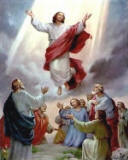
The account of Christ’s Ascension in Acts is the way Luke terminates the post-Easter appearances of Jesus to his disciples. Luke depicts the risen Christ instructing his disciples about God’s kingdom. Now, with his departure, they are to be his witnesses–they will speak and act on his and the kingdom’s behalf. But first they have something to do. They must wait – wait for the Spirit Jesus will send them so that then they can go and announce the new age Christ inaugurated.
We are living in the “in-between time” – a moment of pause between Jesus’ first coming and his return. It has been a long pause! There’s the danger in each generation that the waiting church will lose its fervor and enthusiasm for Christ, who can seem a long way off in the distant past. We can get nostalgic about the past. Our churches are not supposed to be memorial places for a long-dead leader. It’s clear from the angel’s message to the disciples staring up at the space left by their departed leader, that we are not just to be Jesus’ fan club which meets regularly to bask in nostalgia.
Instead, as Jesus promised, we are gifted with the same powerful Spirit that animated Jesus and sustained him, not only through his preaching and healing ministry, but through his long suffering and death. It is that same Spirit that keeps us from stagnating and being just a curious, antiquated relic from the past. Because of the Spirit people should not say of us, “Aren’t they quaint? Aren’t their beliefs and practices so historic and original!” Thanks to the Spirit, we are called and empowered to be modern witnesses to the living Christ still with us, who is reaching out in a new age to do through us, what he did in his lifetime–preach the gospel, heal the sick and bring people back to God.
Remember those mountain climbers who took such care to prepare for their climb of Everest? Jesus takes extra care to furnish his disciples with what they will need when challenged by the sometimes-steep mountains in their lives and ministry. When the time is right he will send them his Spirit. How could these disciples and we possibly go out into the world without being equipped by that Spirit?
Luke doesn’t show the Spirit’s coming immediately after Jesus’ departure. Instead, the disciples had to trust his word and wait. That’s the first thing Jesus tells them to do - wait. When we disciples wait on God, we do that in prayer. So, they gathered with Mary and men and women disciples in the upper room, where they waited and they prayed.
I a little over a week we will celebrate Pentecost when the promised Spirit was poured out on the gathered disciples. We and the whole church are in constant need for renewal in that Spirit. We may not be sent out into “the whole world” to witness to Jesus; but to places closer to home – to our family, school, job, etc. Still, we are called to bring to those people and places our faith, energized by the Spirit.
During the week ahead of us we do again what Jesus instructed his disciples to do – we wait. While we wait we bring to prayer our personal needs for a renewal of faith in the risen Christ. We also pray for those we know who have lost their commitment to our church community, as well as for those whose spirits are battered in any way because of loneliness, poverty, violence, sickness etc.
We pray this week, “How long, O Lord?!” And we hear Christ, ever ready to pour out his Spirit on us, respond, “Soon, very soon.”
Click here for a link to this Sunday’s readings.